06. Seven Habits That Keep Me in a Good State
I have kept up a fitness habit for 23 years, and one thing has only gotten clearer: your state isn't something you buy with one big effort. It's the small daily stuff, piled up. This piece goes through the seven areas I keep up — breakfast and movement, eating little at night, legs, sleep, dressing, reading. Nothing in it is a revelation. The hard part is doing it every year.
On this page
You find out the next morning whether your state is good or not. There's no faking it.
Slept badly? You're drifting in the meeting. Been eating junk all week? You feel heavy. Haven't moved in days? The brain goes dull along with the body. When you're young, none of this matters much — pull an all-nighter and you're still bouncing the next day. Older is different. Overdraw once and it takes days to pay back.
I've kept a fitness habit for 23 years now. Over that time, my daily life has settled into the seven areas below. None of them will surprise you. A couple are close to clichés. But pull any one of them out and I can feel myself sliding, so here they are.
1. Eat breakfast, move every day
Breakfast, I eat every day. An hour or two after getting up works best. You wake up empty; get that meal in first and the day can actually start.
Movement is daily too. It doesn't need to be much. A walk counts. Stairs count. Anything is better than sitting in one place until dark. Push-ups, I do 100 a day, pretty much every day. No equipment, no gym needed. There really is no excuse available.
I don't look to exercise for how it feels right after. That part stopped mattering to me a while ago. What matters is ten, twenty years from now, standing next to people my age, and my body still holding up. That trade is worth it to me.
2. Junk food: draw a line
With food, I drew myself two lines.
One is the pure-carb stuff with no fiber, white rice being the main example. Tastes great, fills you up fast, and you're hungry again just as fast. The other line is trans fats and pastries. Not zero, ever — a bite when I feel like it is fine. My rule is roughly once a month.
Why bother with lines at all? Because on a busy, tired day, nobody thinks. You grab what's there. If the line is already drawn, you don't have to win an argument with your own willpower every single time. Willpower loses those arguments eventually.
3. At night, eat little — or nothing
Evenings are the mirror image of breakfast. Once it's dark, I eat very little. Some nights, nothing.
Somebody told me a thing once that I haven't been able to verify, and I'll flag it as such: when you're hungry, it might not be you that's hungry. It might be your gut microbiome, which can signal the brain too. I still haven't found the original research, so treat that as unproven. But it did change my behavior. Now when I feel hungry at night I stop and ask whether this is real hunger or just noise.
I use 16:8 fasting too, to give the body a proper stretch of time to clear out old cells. And I should be precise about my version, because people do this in opposite ways: I eat breakfast. My eating sits in the daytime. Lunch plus a late dinner, with the window dragged into the night — I don't call that 16:8. Humans aren't nocturnal. The sun goes down; there's no reason to still be eating. Follow the older rhythm and the body mostly takes care of you back.
4. Legs
If I could keep only one part of strength training, I'd keep legs.
People get old in the legs first. Thigh muscle goes faster than the body average. There's a number that has stayed with me for years: from 30 to 40, live badly enough and you can lose something like 5% of your muscle. At 70 kilos, that's 3.5 kilos, gone — and a good chunk of it is legs.
So when I'm doing leg work at the gym, finishing the set is not what I'm thinking about. I'm thinking about being fifty, sixty, and still walking out the door without thinking about it, stairs included. That picture is a good one. These sets today are how it happens.
5. Sleep comes first
If these habits had to be ranked, sleep would be at the top of mine.
Sleep well and you're at full charge; everything has energy behind it. Sleep badly a few nights running and the rest of the list can't save you. My hours are 22:00 to 06:00. Get 4–5 cycles in there and the next day I feel like a freshly built PC. Sleep costs nothing, needs no medicine, and pays back more than anything else on this page. I can't think of a reason not to protect it first.
Then there's snoring, which people shrug off. A snorer takes in less oxygen all night and wakes up heavy and foggy — eight hours of sleep that feels like none. The fix that worked for me is embarrassingly low-tech: air. Sleep with the door open, or crack a window. Just don't give yourself a cold doing it. One night is enough to feel the difference in the morning. Of all the sleep tricks I've bothered with, it's the cheapest one and the one that changed the most.
6. Dress like it matters
I used to think spending time on how I look was a waste of it. I've changed my mind.
People judge by appearance. It's not a nice fact, but it's a fact. Somebody's whole look is what decides, in the first few seconds, whether people want more to do with them. If you want to be seen as a person in a good state, you can't walk out the door looking half asleep.
My standard is almost boringly simple. Clothes clean and fitted — nothing baggy. Hair short, and get it cut when it stops looking tidy. That's it. Two rules.
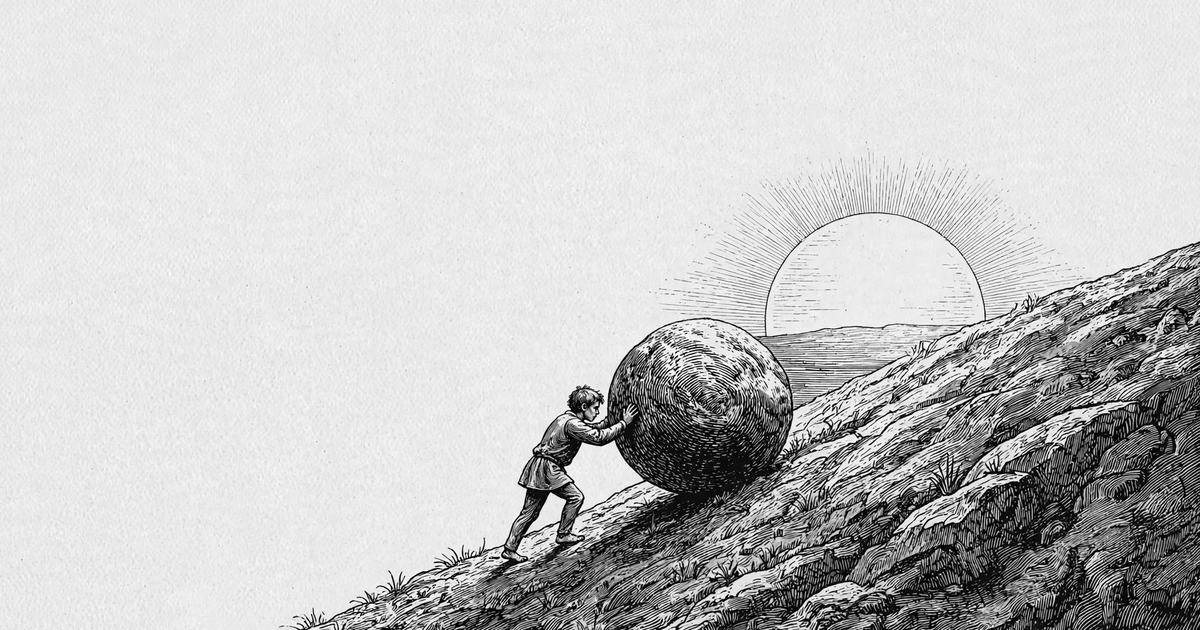
The odd part is what it does to you from the inside. Once I started dressing this way, everything else straightened up a bit too. My way of putting it: that's when my life's road started heading uphill.
7. Reading — just don't start at page one
Last one: reading. Except I cheat a little. I start wherever I'm interested.
It's a tip from Naval Ravikant. A book can be swallowed whole, skipped around, read out of order. There are too many good books and too few hours to sit stuck on one that isn't working. And be honest — read a book obediently from page one to the end, and how much of it do you actually keep?
So my one rule is to read what I can actually take in right now. The parts I don't get, I leave. A few years later I've come back to some of them and suddenly they make sense. That's happened more than once.
Read what you want to read. Keep the core. Do the parts that can be done.
You're what you read, you're what you repeatedly do.
Last thing
Looking back over the list, there's not a secret in it. Every item is something you've heard before.
So where's the difference? In the years, I suppose. My work, my judgment, my patience — all of it sits on top of my state. When the state goes, the rest is talk.
I'll treat this page as a list I wrote for myself. In a few years I'll open it again and count how many of the seven I'm still doing.